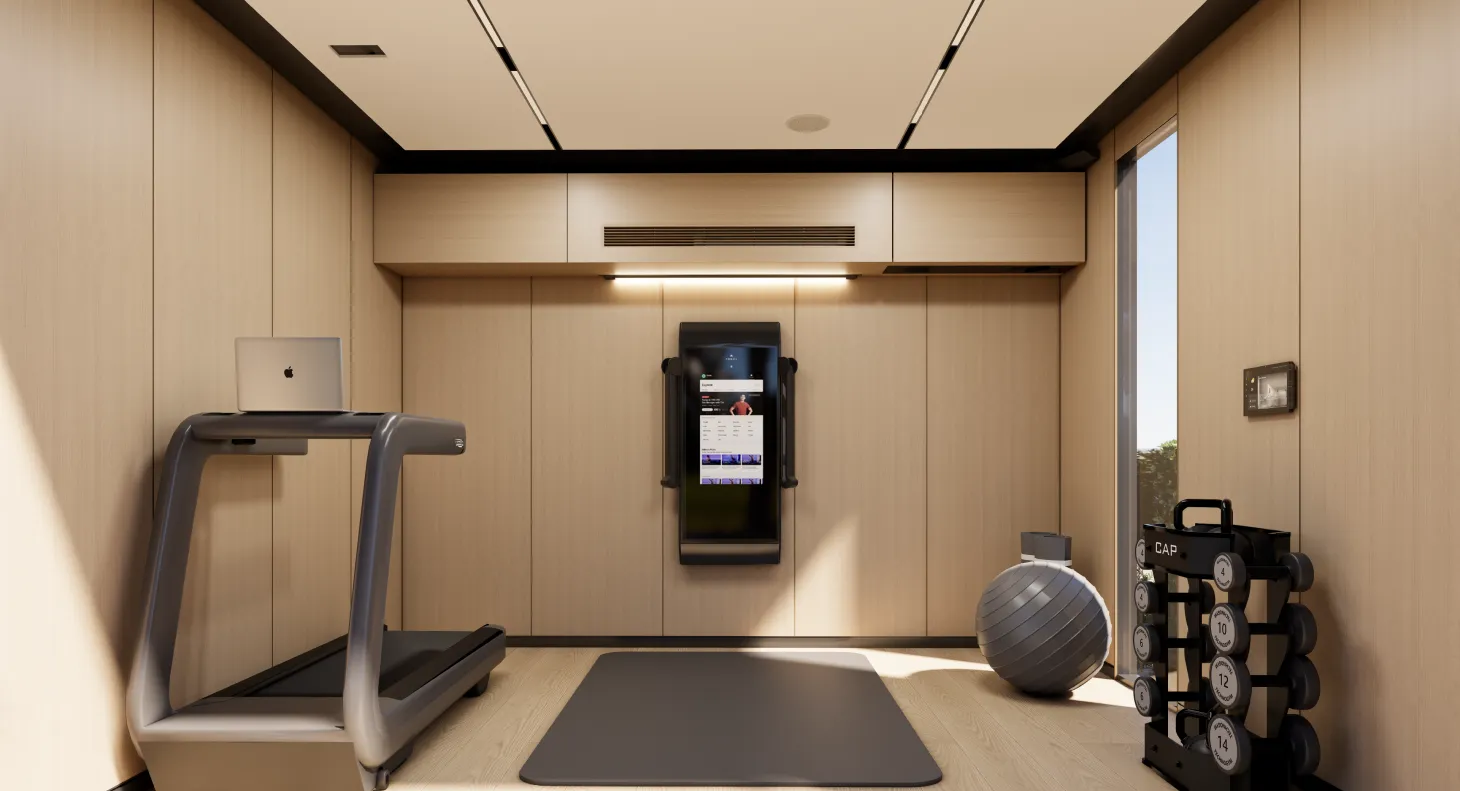
The High-Performance Home Gym: Sweat and Blast Music Without Waking the House

Maximizing 120 Square Feet: The Smart Design Principles of L·Space
Ask any traditional builder to deliver a truly functional, multi-use detached unit in under 150 square feet, and they’ll likely hand you a blueprint for a glorified tool shed.
Most compact structures feel exactly like what they are: cramped.
But as builders who have spent years on both complex residential jobsites and high-precision manufacturing lines, we see small footprints differently. Spatial comfort isn’t a luxury of raw square footage—it is a discipline of mathematics and industrial design.
When we engineered L·Space, we didn’t just downsize a house. We optimized every single cubic inch of a precision footprint to deliver a “big room” feel without the real estate friction.
The Math Behind the Footprint: 12’5” x 9’18”
In high-end architectural framing, layout dimensions dictate your entire sensory experience. L·Space is built to exact, calculated specifications: a 12’5″ width by a 9’8″ depth, capped with an asymmetrical ceiling height scaling up to 10’6″.
This isn’t an arbitrary layout. By extending the width to over twelve feet, we deliberately created a wide horizontal axis.
When you step inside, your eyes naturally track horizontally across the room rather than hitting a restrictive side wall right away. Combined with the vaulted pitch of the roof, the volume of the space expands vertically, completely erasing the closed-in feeling typical of standard backyard sheds.
Eliminating Boundaries: Floor-to-Ceiling Glass Integration
The fastest way to make a small room feel like a cage is to punch a few small, standard windows into the drywall. It creates harsh shadows and traps your sightline indoors.
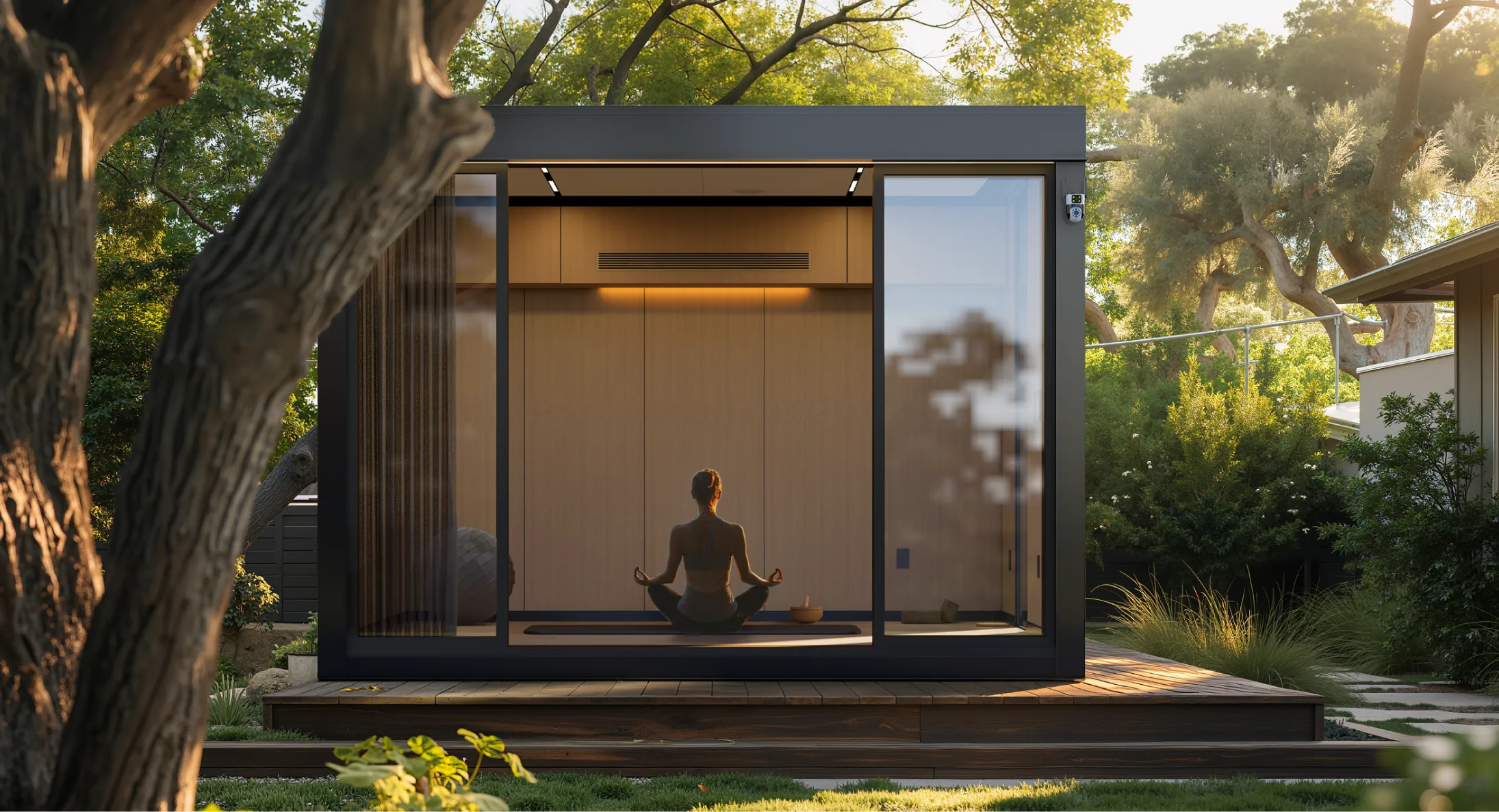
Our solution was a structural face swap: replacing an entire primary wall with an integrated premium sliding door and floor-to-ceiling glass system.
The Assembly Line Secret: Hidden Modular Storage
If you put standard residential furniture into a 120-square-foot room, you instantly clutter the floor plan and choke your walking paths.
Why It Matters: The Clean-Sheet Advantage
When a high-end EV manufacturer designs a vehicle, they don’t modify a gas car chassis; they start fresh to maximize cabin space.
L·Space uses that exact same clean-sheet logic. Because it is built with specialized carbon-based composite panels and pre-engineered WPC siding, we don’t need the thick, inefficient structural framing required by traditional wood-stud construction.
You get thinner, stronger walls with vastly superior thermal and acoustic performance—meaning more actual living space is delivered to your property.
What to Look For in a Minimalist Structure
If you are looking to add an ultra-efficient footprint to your property, demand these manufacturing standards:
See Efficiency in Action
The transition from a cramped home studio to a precision-engineered creative laboratory is something you need to experience firsthand.
Book a Free Consultation with our team to discuss your long-term goals and explore our future-proofed models.
Want to see how an eco-friendly, accessible retreat fits on your lot? Use our Check My Lot tool to visualize your property’s potential in 3D instantly.
Discover More
The High-Performance Home Gym: Sweat and Blast Music Without Waking the House
The LA Metro Loophole: How to Bypass Parking Mandates in the Transit Expansion

Defending the Coast: Prefab Built for Pacifica and Half
About Us