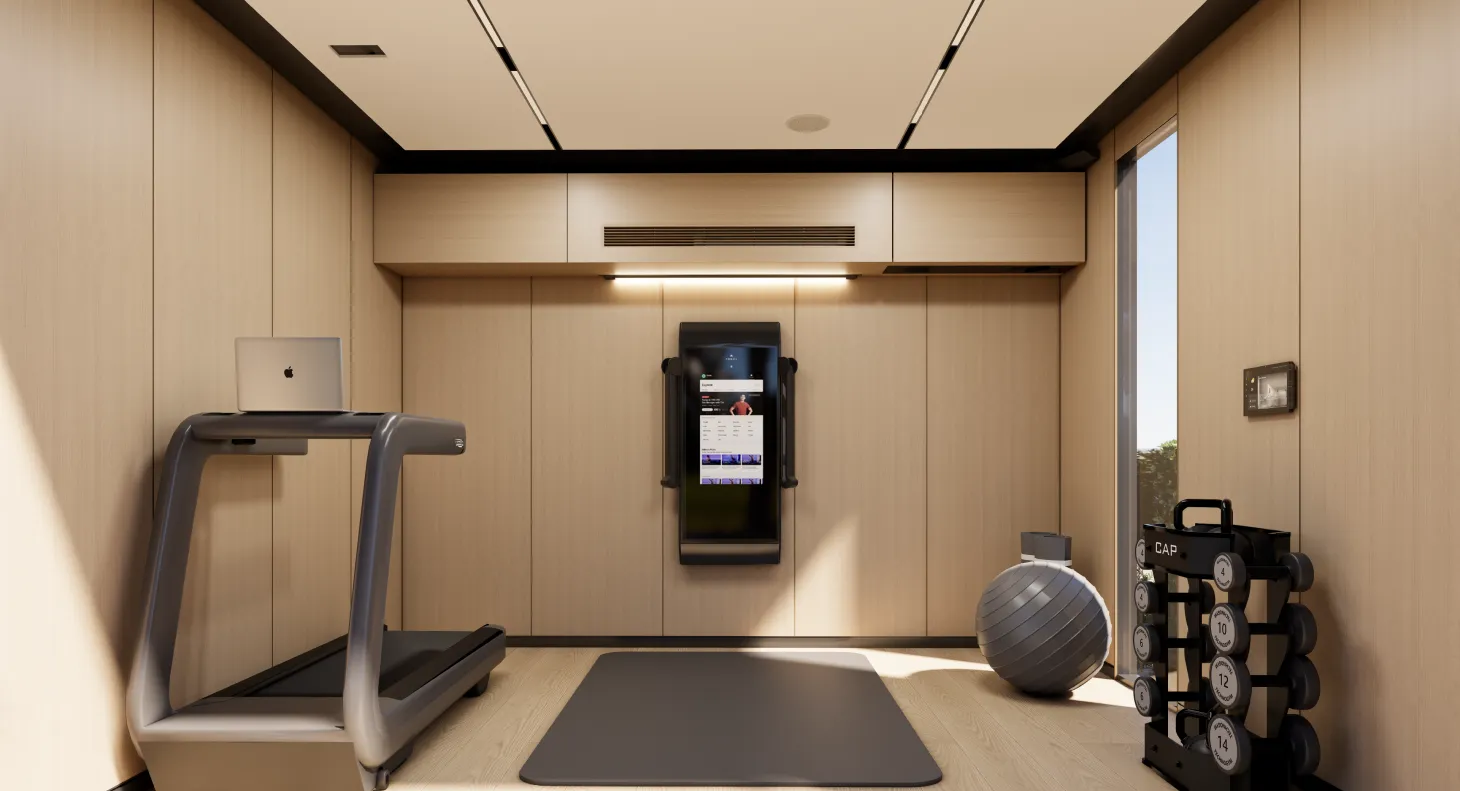
The High-Performance Home Gym: Sweat and Blast Music Without Waking the House

Out-Engineering the Bay Area Market: The Co-Buyer Playbook
Bay Area real estate has officially outpaced the single-income dream.
When a standard mid-century fixer-upper in San Jose or Berkeley commands millions, traditional buying paths break down. But we’re seeing a tactical shift on the ground.
Engineers, colleagues, and long-time friends are teaming up. They are pooling capital to buy the dirt, but they aren’t trying to share a kitchen sink.
Enter the Interwoven Home.
This isn’t a duplex, and it’s not a commune. It is a highly engineered, multi-unit system—combining a modular Main Home with an ADU—designed from day one to share a lot without sacrificing personal autonomy.
Why True Privacy Is an Engineering Problem, Not an Aesthetic One
The biggest risk of “house hacking” with a co-buyer isn’t the mortgage structure. It’s acoustic friction.
If you can hear your business partner’s espresso machine or late-night Zoom call through a shared drywall partition, the arrangement has a shelf life.
Traditional stick-built construction handles sound poorly unless you pay a massive premium for aftermarket damping. We look at it like EV manufacturing: isolation is built into the chassis.
You share the property tax bill. You do not share a soundscape.
The Builder’s Secret: Why Prefab Delivers an “A-Grade” Asset
Most co-buyers assume custom builds are the premium route. The reality of the dirt tells a different story.
Traditional site-built projects are plagued by “firefighting”—weather delays, missing trade subs, and material warping in the rain. When a project drags on for 14 months, friction rises, budgets bleed, and the final fit-and-finish suffers.
We cut the friction out of the equation.
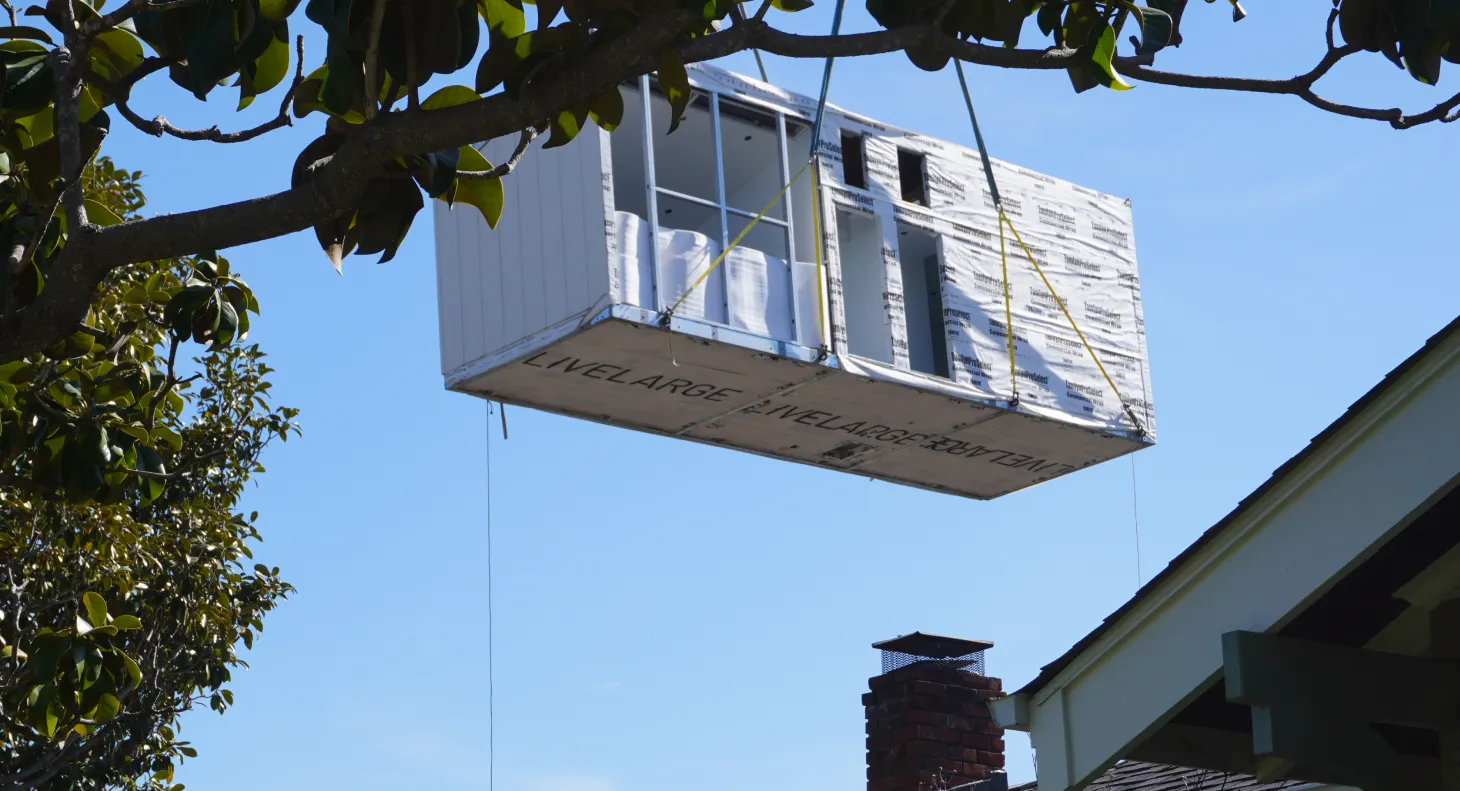
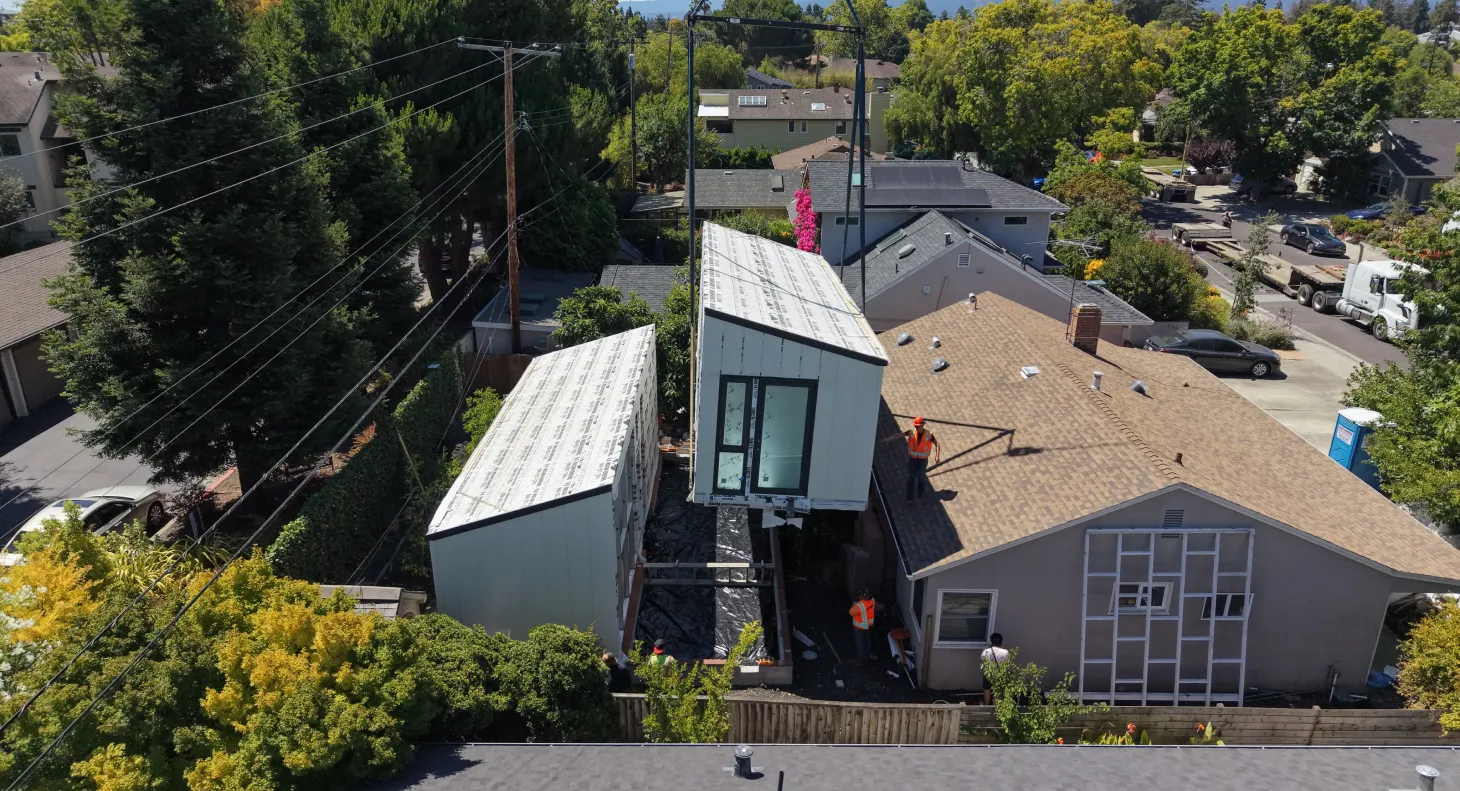
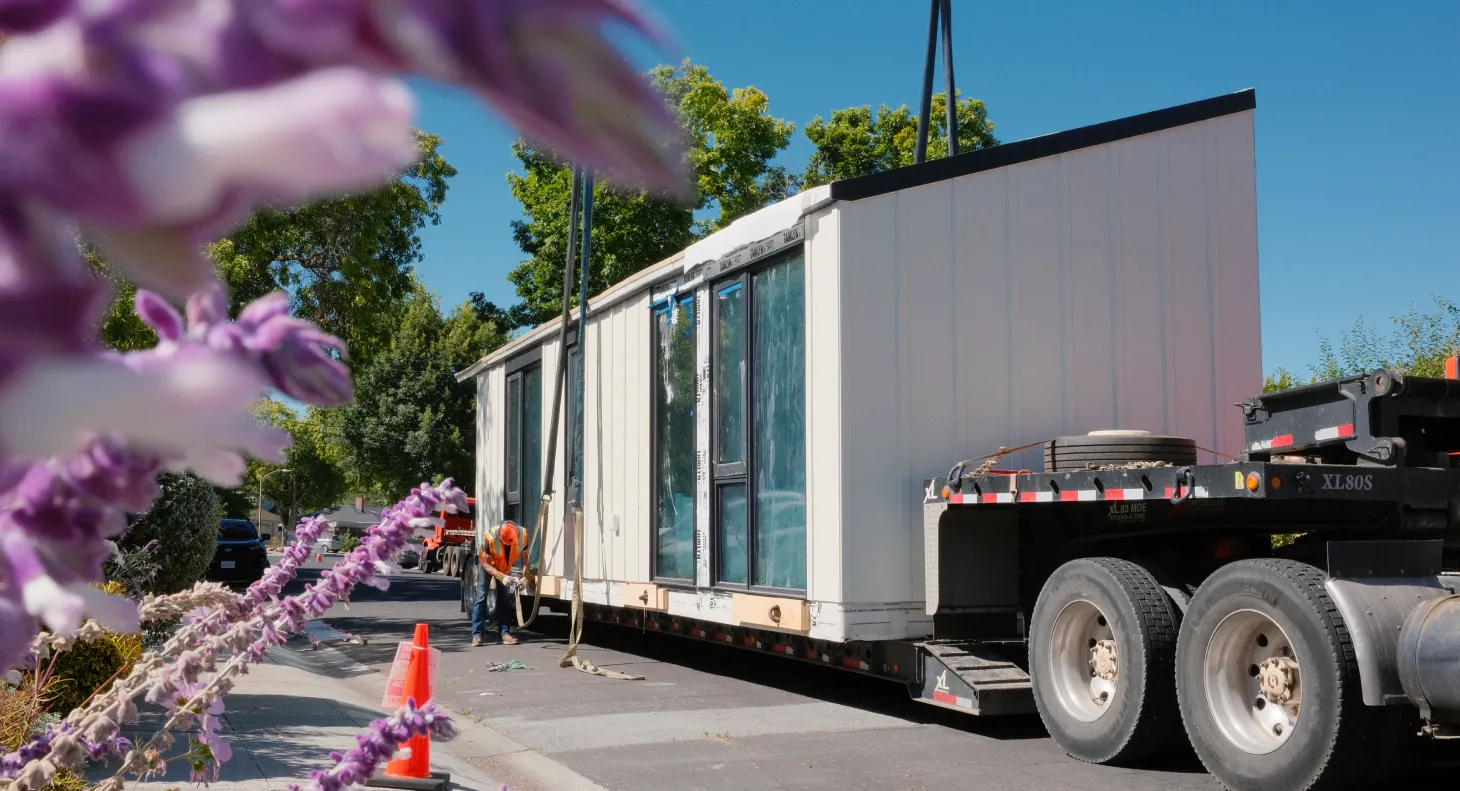
By building the modules in a controlled, high-tech factory environment, we achieve tolerances down to the millimeter. While your site is being cleared and utility trenches are dug, your homes are being built simultaneously.
When the modules arrive on-site, they hook into the pre-laid foundation like a glove. Less time on site means fewer neighbor complaints, lower carrying costs, and an incredibly tight, energy-efficient structure that retains its value for decades.
How the Interwoven Ecosystem Works
1. The Anchor (Main Home)
A high-efficiency, multi-bedroom footprint designed with expansive glass to maximize natural light and give the illusion of a much larger estate.
2. The Satellite (ADU)
A fully independent, premium accessory dwelling unit with its own high-end kitchen, laundry, and separate utility shut-offs.
3. The Connective Tissue (The Yard)
Smart site planning that uses native landscaping, architectural screens, and strategic orientation to ensure both units have private outdoor zones that never overlook each other’s living spaces.
Ready to Walk Through a Finished Space?
Co-buying is a brilliant financial play, but it requires the right physical architecture to work long-term. You need to feel the density of the walls and experience the silence for yourself.
Let’s look at your target lot or walk you through a finished unit.
Book a Preliminary Site Evaluation or come visit our team at the showroom to see how the Interwoven Home can scale your buying power.
Discover More
The High-Performance Home Gym: Sweat and Blast Music Without Waking the House
The LA Metro Loophole: How to Bypass Parking Mandates in the Transit Expansion
Defending the Coast: Prefab Built for Pacifica and Half
About Us