Architecture for Connection: Why High-End Prefab is the Ultimate Multi-Generational Leverage

Why LiveLarge in 2026?
A Smarter Way to Build a Prefab ADU in California
If you’re exploring a prefab ADU in California in 2026, you’ve probably noticed something:
There are a lot of options.
Prefab companies. Traditional contractors. Hybrid builders. Design-build firms. Kit homes. Modular systems.
At LiveLarge, we welcome that competition. It means homeowners have more ways than ever to unlock the value of their property.
But it also raises an important question:
What actually makes one ADU system better than another?
In this article, we’ll walk through the key differences between LiveLarge, other prefab ADU builders, and traditional construction — so you can decide what approach makes the most sense for your project in 2026.
The ADU Landscape in 2026
California’s ADU market has matured significantly.
Just a few years ago, most homeowners had two choices:
Today there are dozens of companies offering prefab ADUs in California, each with different systems, materials, timelines, and levels of service.
Some focus on design.
Some focus on speed.
Some focus on factory manufacturing.
At LiveLarge, our approach is simple:
Combine high-performance construction with a fully managed development process.
That means delivering:
Structural Strength: Why Steel Framing Matters
Most prefab ADUs — and nearly all traditional homes — are built using wood framing.
Wood works well in many situations, but it also comes with long-term challenges:
LiveLarge uses steel frame construction, which offers several long-term advantages.
Steel structures:
For homeowners thinking about long-term rental income or multi-generational housing, structural durability becomes an important consideration.
Disaster Resilience in a Changing California
In recent years, wildfire resilience and structural safety have become top priorities for California homeowners.
LiveLarge homes are engineered with high-performance structural systems, designed to exceed typical prefab standards.
This doesn’t mean traditional construction is unsafe — far from it. Many excellent builders create incredibly resilient homes.
But prefab systems can offer advantages when:
That consistency allows the system to be refined and improved over time.
Comfort: Why Many Prefab ADUs Feel Different
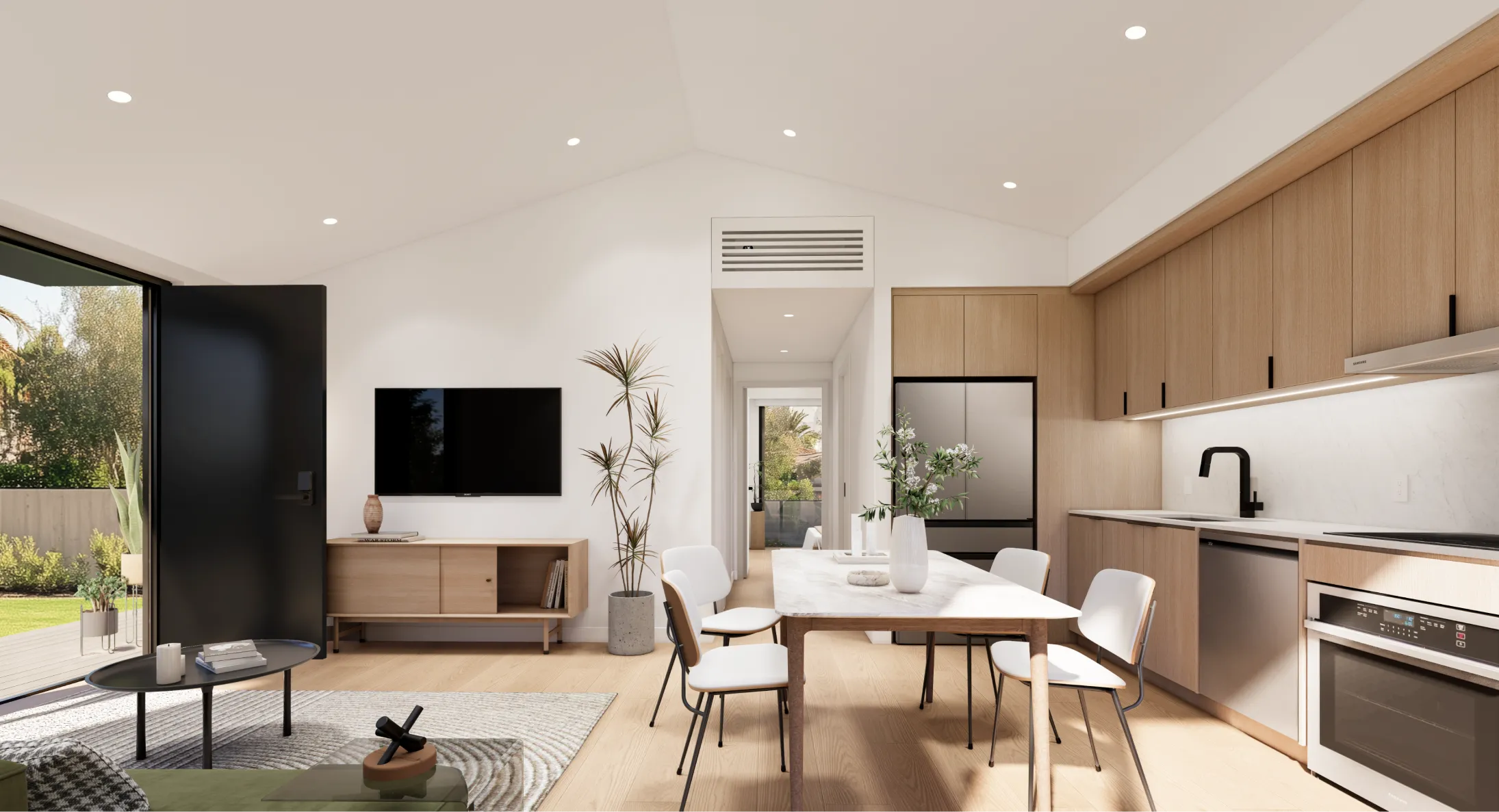
One of the most common surprises homeowners experience when stepping into a LiveLarge unit is how quiet and solid it feels.
This is largely due to the building envelope.
LiveLarge homes feature:
Many prefab ADU builders use dual-pane windows, while traditional builds vary depending on contractor and budget.
The result is better:
For ADUs used as rentals, guest homes, or offices, this makes a noticeable difference.
Design Efficiency for Small Spaces
ADUs are different from traditional homes.
Every square foot matters.
LiveLarge floor plans are engineered specifically for small-space living, balancing:
Traditional homes can be fully customized, but small layouts sometimes require extensive architectural work to achieve the same efficiency.
Prefab systems allow designers to refine layouts over hundreds of builds, improving them over time.
Customization: Finding the Right Balance
Traditional construction offers the most customization.
You can design almost anything.
But that flexibility can also introduce complexity:
LiveLarge takes a different approach.
Layouts are fixed for manufacturing efficiency, but homeowners can customize:
This approach allows homeowners to personalize their ADU while keeping projects predictable.
Timeline Reality: How Long Does an ADU Take in 2026?
One of the biggest frustrations homeowners face with construction is uncertain timelines.
Traditional ADU projects can take 12 months or longer, depending on permitting, contractor schedules, and weather delays.
Many prefab builders advertise faster timelines, but actual delivery can still stretch to 8–10 months or more.
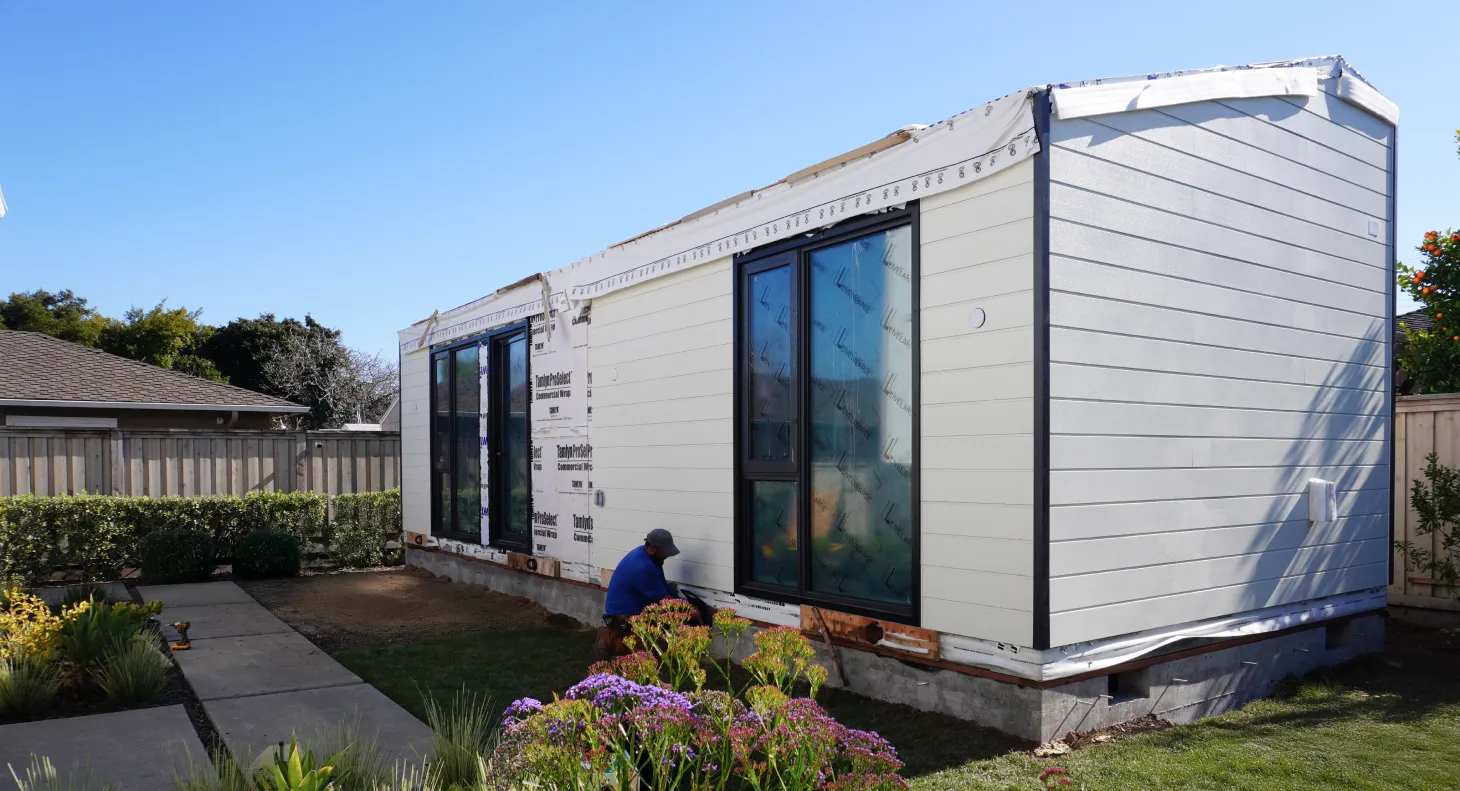
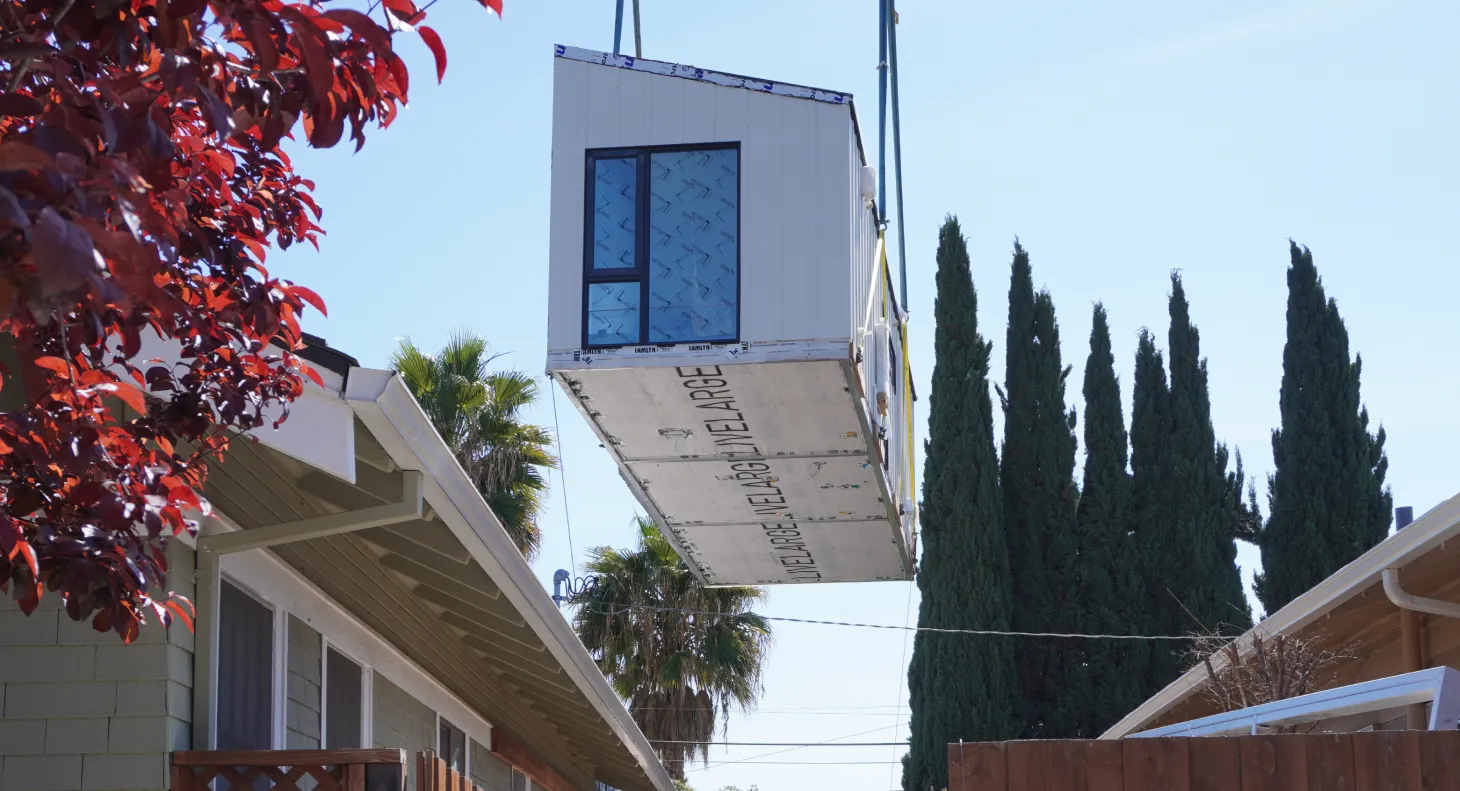
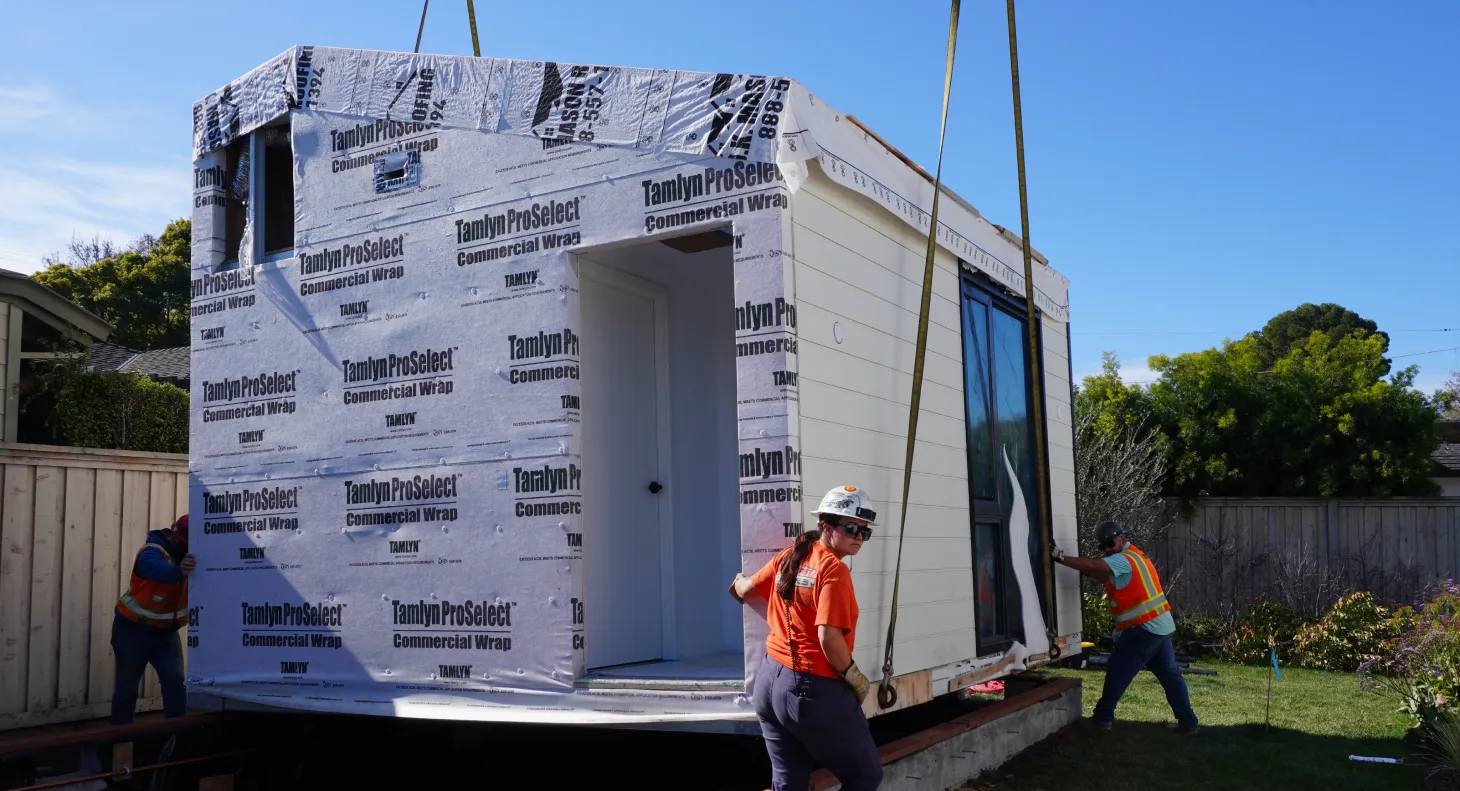
LiveLarge projects are typically completed in about six months, with some projects finishing even faster depending on permitting and site conditions.
Because much of the home is manufactured off-site, on-site work is dramatically reduced.
Cost Overruns and Change Orders
Anyone who has completed a major construction project knows how common change orders can be.
Unexpected costs often arise from:
LiveLarge projects minimize these risks through a fixed-scope system, where the home is designed and engineered before manufacturing begins.
That doesn’t eliminate every possible variable — site conditions can always introduce surprises — but it significantly reduces the likelihood of major cost overruns.
Permitting and Project Management
One of the most overlooked challenges of building an ADU is project coordination.
Traditional construction often involves multiple parties:
LiveLarge manages the entire process under one umbrella, including:
This single-team accountability simplifies the experience for homeowners who don’t want to manage a full construction project themselves.
Warranty and Long-Term Support
Another important consideration when choosing a prefab ADU builder is long-term support.
LiveLarge homes include:
Warranty terms vary widely across the industry, so it’s worth reviewing this carefully when comparing ADU providers.
When Traditional Construction Still Makes Sense
Prefab ADUs are not the right solution for every project.
Traditional construction may be better if:
Many homeowners still choose traditional construction for these reasons.
Prefab systems simply offer a different path, focused on speed, predictability, and engineered design.
Why Many Homeowners Are Choosing Prefab ADUs in 2026
As the California housing market evolves, homeowners are increasingly looking for solutions that are:
Prefab ADUs — particularly turnkey systems like LiveLarge — address many of these challenges.
For homeowners who want to add space, generate rental income, or create housing for family members, prefab construction has become one of the most practical options available.
Explore LiveLarge ADUs
If you’re considering a prefab ADU in California in 2026, our team is happy to walk you through the process and help determine whether a LiveLarge home is the right fit for your property.
You can:
Or start by learning what might fit on your property.
Discover More
Architecture for Connection: Why High-End Prefab is the Ultimate Multi-Generational Leverage
Architecture for Connection: Why High-End Prefab is the Ultimate Multi-Generational Leverage
The Fire Rebuild: Why Speed to Home is the Only Metric
About Us