Marin Hillside ADUs: Overcoming Slopes and Fire Codes

The Logistics of the Fire Rebuild: Rebuilding for Real-World Resiliency
If you’ve lived through the devastation of a California wildfire, you know that “business as usual” construction is a luxury of the past. Rebuilding in a Wildland-Urban Interface (WUI) zone isn’t just about putting up four walls and a roof; it’s about tactical engineering.
At LiveLarge, we don’t look at fire codes as a bureaucratic hurdle to clear. We see them as the baseline for what we call “Chapter Two” of construction—a fundamentally better, safer way to build. We don’t cut corners to hit a budget; we “overbuild” to ensure your home is a fortress of refinement.
Non-Combustible Materials 101: Beyond the Wood Frame
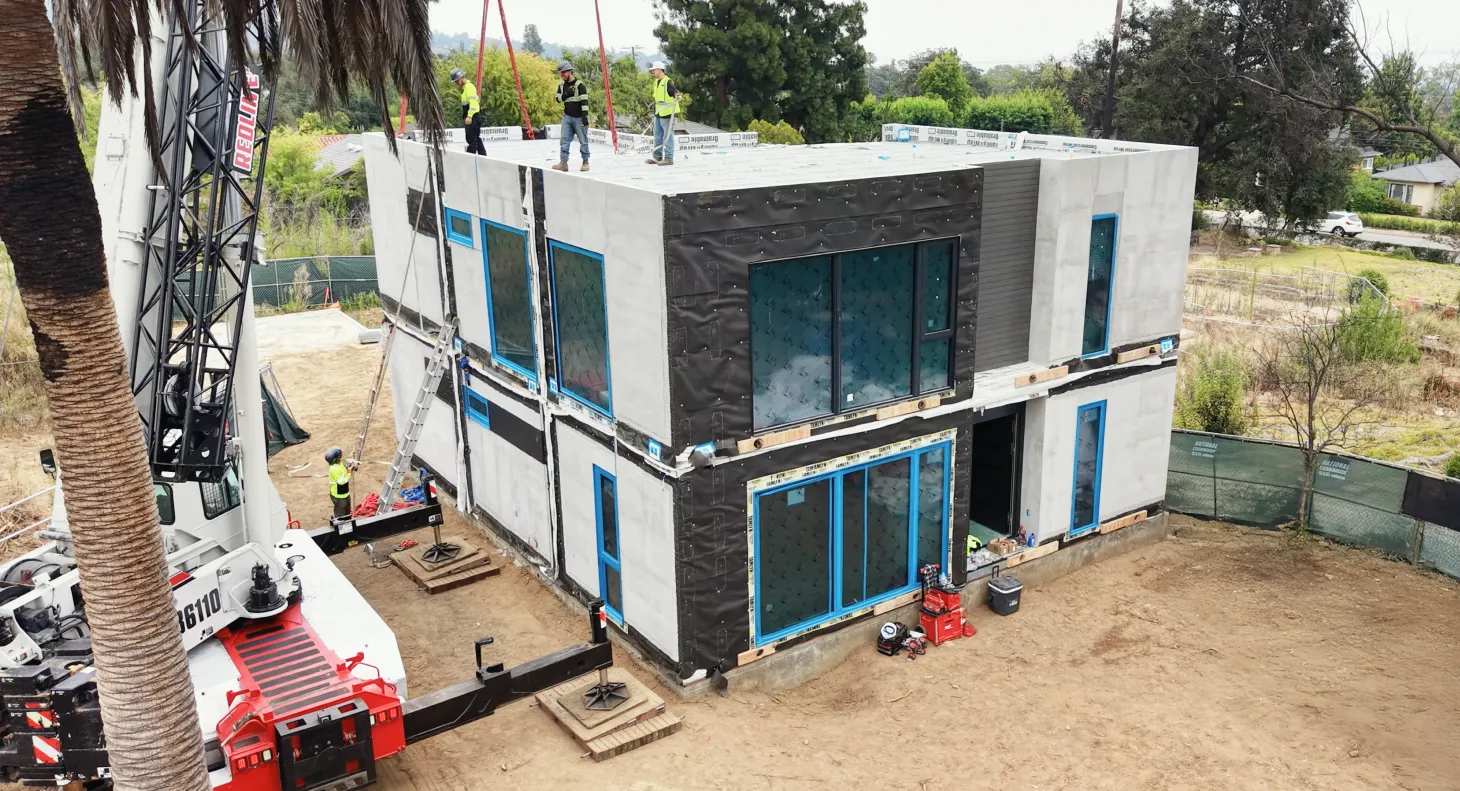
Most traditional homes are built with a combustible core. When the heat rises, the structure contributes to the fire. We’ve traded the traditional “stick” for the precision of high-tech manufacturing.
The “Thunk” of WUI Compliance
A fire-hardened home shouldn’t feel like a bunker; it should feel like a sanctuary. The same features that protect you from a wildfire also create a “Mercedes-Benz” level of comfort.
Take our triple-pane tempered glass windows. Standard glass shatters under heat, letting embers inside to ignite your curtains. Ours are engineered to resist heat and impact.
When you close a LiveLarge door, you don’t hear a rattle—you hear a solid “thunk”. That seal doesn’t just block embers and heat; it rivals noise-canceling headphones for quiet and comfort.
Why It Matters: Rebuilding for Resiliency
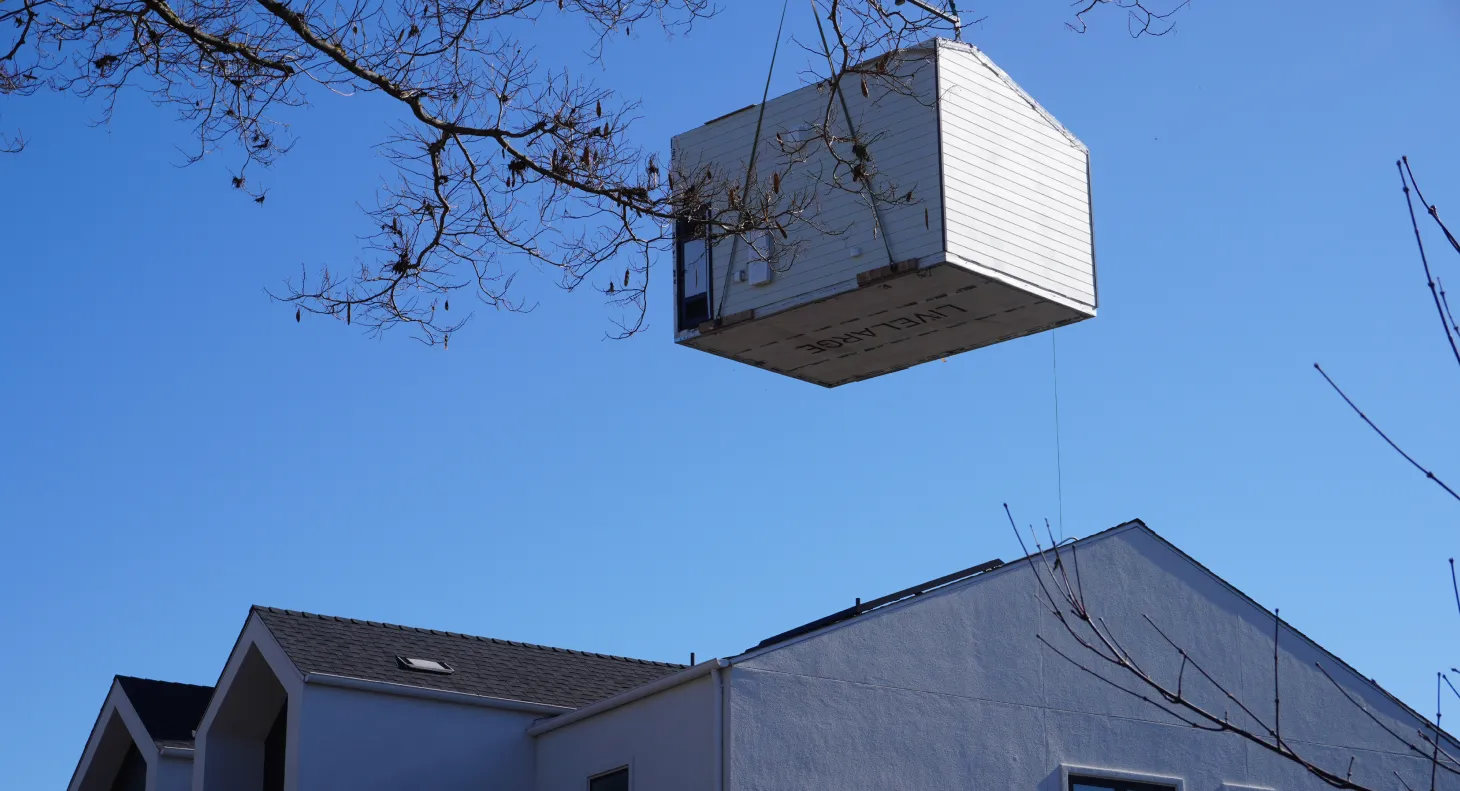
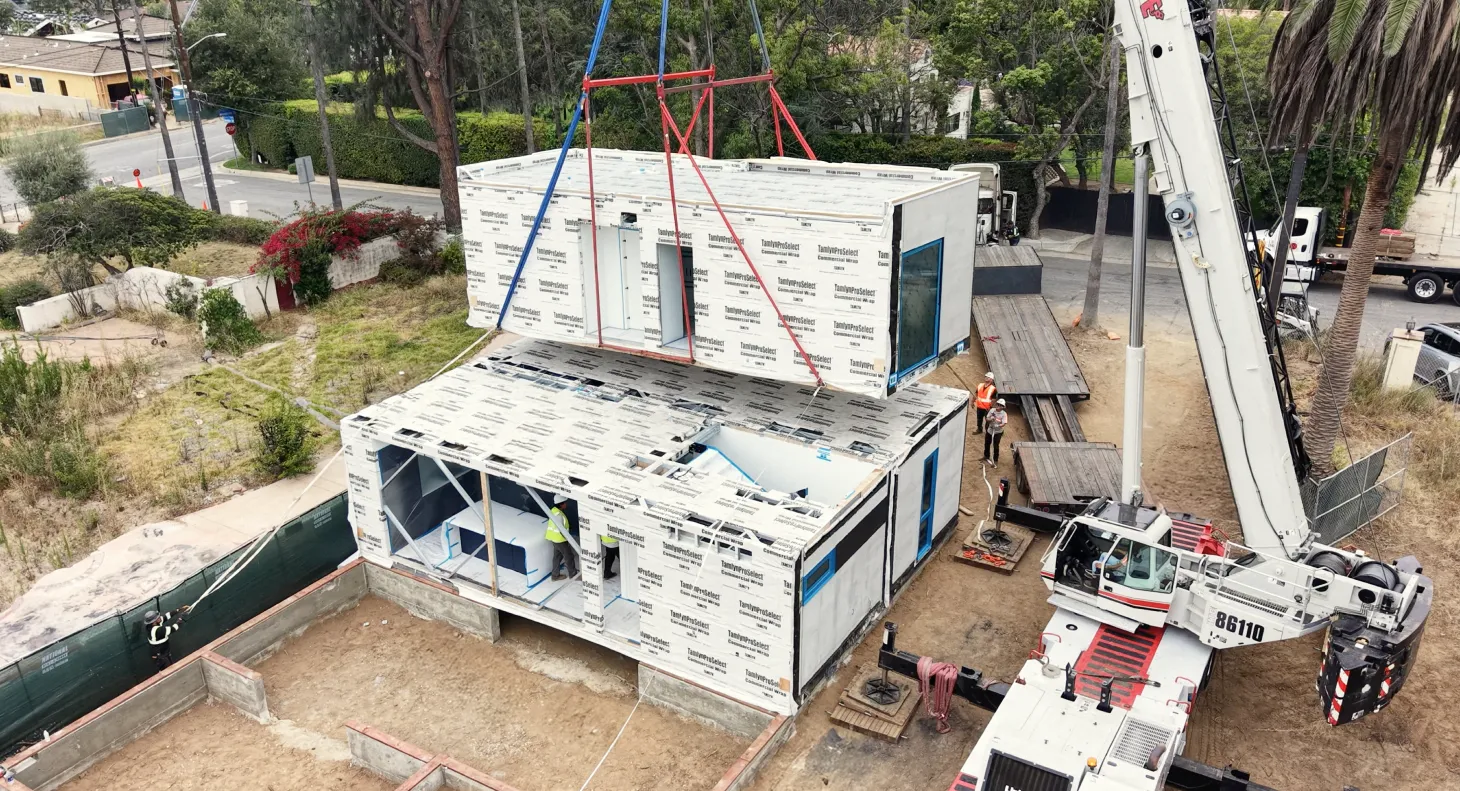
Traditional construction in fire zones often results in “B-minus” versions of a dream home because of ballooning costs and subcontractor shortages. By moving the hardest parts of construction into a controlled factory, we eliminate that “firefighting” on-site.
What to Look For in a Fire-Resistant Build
Don’t settle for a builder who “meets code.” Look for a partner who understands the engineering of a resilient property.
Ready to Rebuild Smarter?
If you’re rebuilding after a wildfire, the path home doesn’t have to be an unpredictable nightmare of red tape and delays.
Book a Design Consult or visit our Showroom to feel the weight of our materials and hear the silence of a truly resilient home for yourself.
Discover More
Marin Hillside ADUs: Overcoming Slopes and Fire Codes
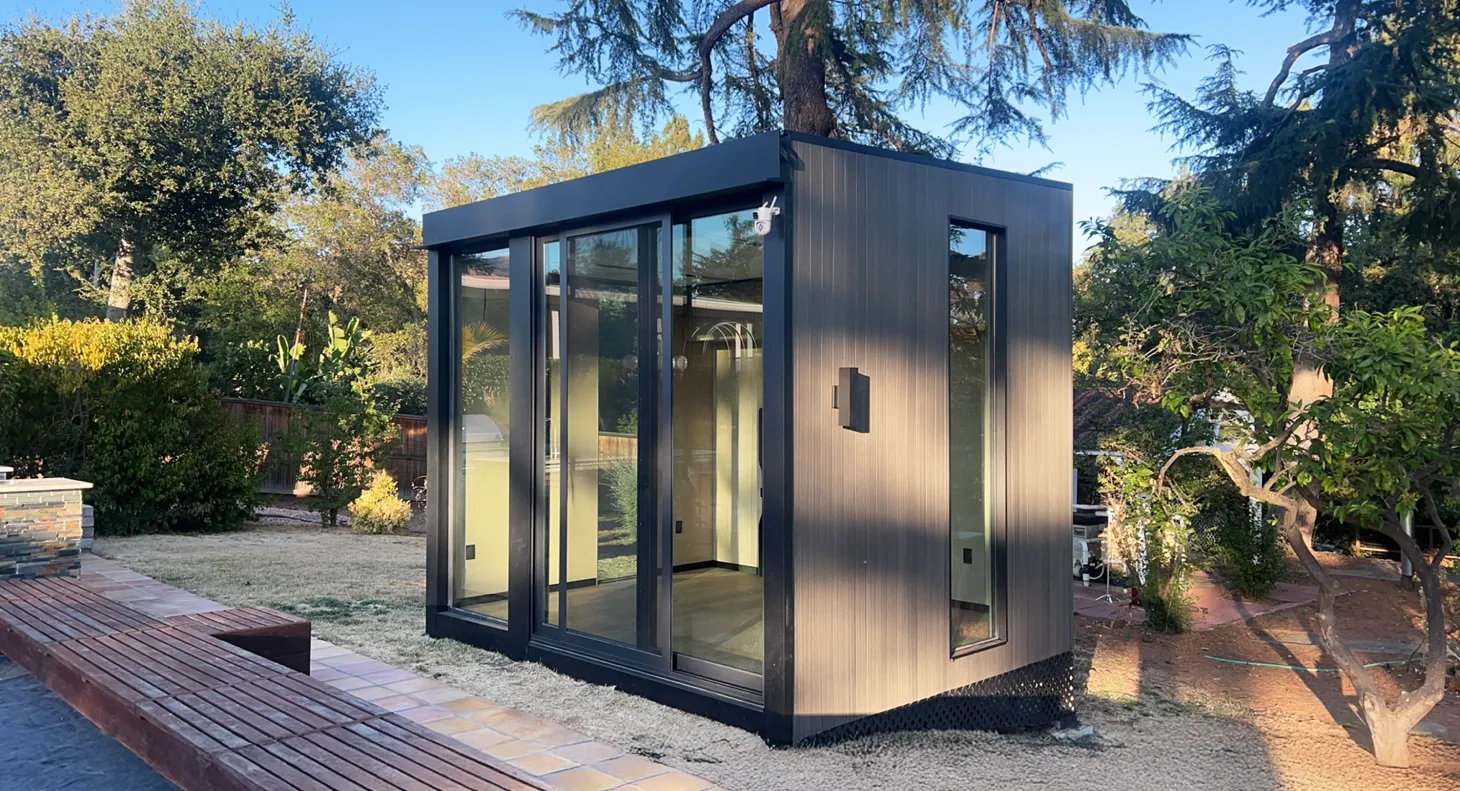
The Capital Play: Permit-Free Pods vs. The Master Suite Remodel
The ADU Pool House: Merging Luxury Guest Suites with LA Outdoor Living
About Us